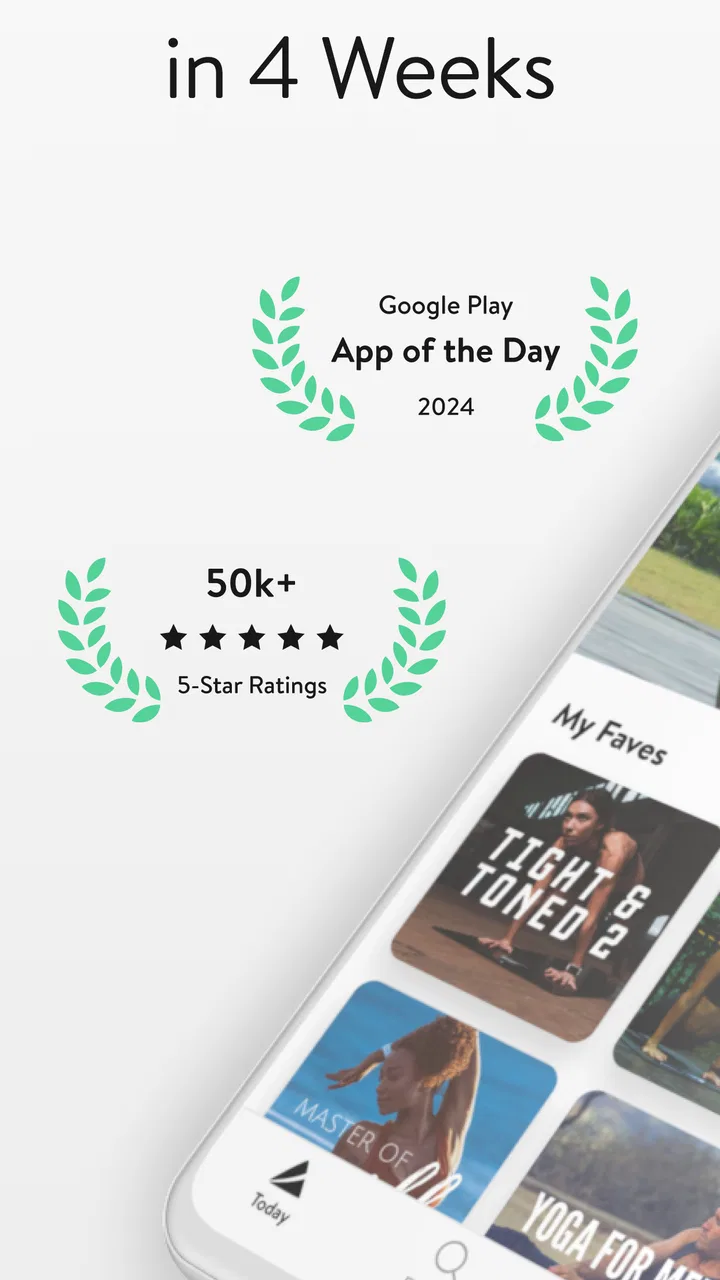
Asana Rebel: Get in Shape
- 3.9
- Rating
- 5.00M
- Installs
- Free
- Price

 Analysis by App-foxy
I approached Asana Rebel as a practical lifestyle app rather than a traditional yoga library. Its focus is yoga-inspired fitness, with sessions designed to make movement feel more energetic and goal-oriented than a quiet stretching routine. After spending time with it, my impression is that it works best for people who want guided exercise at home but do not want a rigid gym-style program.
The app is free to install, although it includes in-app purchases ranging from $15.99 to $114.99 per item. That distinction matters: you can explore the experience without paying immediately, but anyone planning to use the full training system should look carefully at what is available before committing. I also found the presentation more fitness-focused than the word “yoga” might suggest. If you expect long meditation sessions, detailed pose theory, or a traditional studio atmosphere, this may not be the right match.
A fitness app with yoga at its center
Asana Rebel sits in the lifestyle category and is developed by Asana Rebel. Its central idea is easy to understand: use yoga-inspired movement to support strength, mobility, flexibility, and general fitness. That combination gives it a different feel from a basic pose-reference app. You are not simply browsing instructions for downward dog or a seated twist; you are looking for a guided way to fit movement into an ordinary day.
You May Also Like

 Blood Strike: 2.5 Anniversary
Blood Strike’s Loadouts Turn Every Drop Into a Tactical Gamble
A close look at Blood Strike’s custom loadouts: how fast access to signature weapons reshapes its battle royale rhythm, rewards preparation, and narrows the gap between fights.

 Pandora - Music & Podcasts
Pandora’s Music Is Easy to Start, but Harder to Recover
Pandora’s strength is its low-effort path from a seed to a station. Its weak spot is how much confidence it asks you to place in connection, setup, and quiet recovery.

 8 Ball Pool
 Is Built on Rivalries, Rematches, and Routine
A close look at the rivalries, rematches, shared routines, and unanswered safety questions that turn a quick pool match into a persistent mobile community.

 Samsung Music
’s Quiet Strength Is Playing What You Already Own
Its reach comes less from spectacle than from dependable access to a personal library. That simplicity is both the app’s strongest retention engine and its ceiling.

 AccuWeather: Weather Radar
AccuWeather Review: A Quick, Clear Forecast for Everyday Decisions
For everyday plans, the best forecast is the one you can understand quickly. AccuWeather makes rain timing, radar, and local conditions easy to act on, with a few trade-offs.

 Hill Climb Racing
Why Hill Climb Racing Still Turns Crashes Into One More Run
A tiny car, a bumpy hill and one more upgrade: Hill Climb Racing keeps resurfacing because its simple chaos makes every near-miss feel personal.
More From Our News Desk
View All News


I liked that positioning because it speaks to a common problem. Many people want to exercise but find a conventional workout intimidating, repetitive, or too demanding to organize alone. A yoga-inspired format can feel more approachable, while the fitness emphasis gives the sessions a clearer purpose. The trade-off is that the experience may feel less gentle than someone expects from a purely restorative yoga application.
The store’s summary describes the product as a way to feel sexy and healthy, but I would judge it more practically. Its strongest appeal is not a slogan; it is the possibility of opening the app, choosing a suitable session, and getting moving without planning an entire routine yourself. That convenience is valuable when your available time changes from day to day.
What the current version tells me
The current version is 6.28.0.7380, and the app has been available since October 19, 2016. That long presence gives the product a more established feel than a newly launched fitness experiment. It has also reached over 5 million installs, with an average rating of 3.9 from around 82 thousand ratings and about 2.9 thousand written reviews.
I would not treat those figures as a guarantee that every user will have the same experience. A fitness app can suit one person beautifully and frustrate another, especially when motivation, available space, fitness level, and willingness to pay vary so much. Still, the size of the audience suggests that the concept has broad appeal and has had time to develop beyond a first-release prototype.
The minimum operating-system requirement is Android 8.0, which keeps the app accessible to many older devices. That is useful if you do not own the newest phone and want to use a spare handset for workouts. On the other hand, older hardware can make any video-led fitness experience feel less comfortable if loading, storage, or screen performance becomes an issue.
How I would use it during a normal week
My most realistic use case would be a weekday morning when I have enough time to move but not enough patience to design a workout. I would choose a session based on how I feel rather than forcing the same routine every day. After a poor night’s sleep, a mobility-oriented choice makes more sense than trying to prove something with an intense workout. On a day when I feel rested, a more demanding yoga-inspired session can provide a stronger challenge.
That choice is one of the app’s practical strengths. It lets the workout serve the day instead of making the day serve a fixed program. I also think it could work well after work, especially for someone who wants a transition between sitting at a desk and relaxing in the evening. A short, guided session can be easier to start than a trip to a gym, even if the total exercise time is not dramatically different.
There is a useful habit-building trick here: decide in advance where the phone will sit and what clothing you will wear, then treat the app as the final step rather than the first decision. This reduces the temptation to browse endlessly. With a service that offers different kinds of sessions, choosing a simple routine before you are tired is often more effective than relying on motivation in the moment.
Where the yoga-inspired approach works well
The blend of yoga and fitness gives the app a softer entry point than many strength-training platforms. Someone who feels uncomfortable with gym terminology may find flowing movement easier to approach. It can also suit users who want more than stretching but do not enjoy repetitive sets of conventional exercises.
I found the format particularly appealing for people who care about how a workout feels as well as what muscles it targets. Yoga-inspired movement can encourage attention to balance, control, and range of motion. Those qualities are easy to neglect when every session is built around speed or heavier resistance. The app’s identity makes it more likely that you will think about the quality of each movement rather than simply rushing through repetitions.
It may also be a good option for people who travel or move between rooms at home. You do not need to recreate a full gym setup to begin, and the approach is naturally compatible with a mat-sized area. That does not mean every session will be effortless or equipment-free in every circumstance, so I would still check the requirements of a chosen workout before starting in a cramped space.
The most useful mindset is to treat the app as a guided movement menu, not as a substitute for a personal trainer. It can help you choose and follow a session, but it cannot see whether your knee is collapsing inward, whether your back is compensating, or whether pain is a warning sign. Beginners should move conservatively and stop when something feels wrong.
How it compares with ordinary alternatives
Compared with free video platforms, Asana Rebel offers a more focused environment. Free videos can provide excellent instruction, but finding the right one often means sorting through thumbnails, inconsistent teaching styles, and routines that do not fit together. A dedicated app is usually better when you want exercise to feel like a repeatable habit rather than a search task.
Compared with a traditional yoga studio, the app is more convenient and less socially demanding. You can practice at home and choose your timing. The downside is the lack of live correction and the atmosphere that helps some people stay accountable. If you know you skip home workouts whenever nobody is expecting you, a class, coach, or training partner may be more effective.
Compared with a conventional strength-training app, this one is a better fit if mobility and flow matter to you. A strength-focused alternative may be preferable if your main goal is structured resistance progression, detailed lifting guidance, or a program centered on measurable loads. Asana Rebel’s appeal is broader and more movement-oriented, not a replacement for every kind of training.
Compared with a meditation-first yoga app, it is the less suitable choice for users who mainly want relaxation, breathwork, or long restorative practices. The fitness angle is important. I would recommend it to someone who wants to feel active, not to someone searching primarily for a digital mindfulness room.
What existing users may notice in the current release
For someone returning after a long break, the current version should be approached as a refreshed product rather than a frozen copy of the app first released years ago. The version number shows that the service has moved through many iterations, and that matters because established fitness apps often refine how people discover sessions, move through programs, and return to regular use.
My advice for returning users is not to assume that an old routine or old expectation still represents the whole experience. Revisit the available choices with a beginner’s eye. Look for sessions that fit your present ability, especially if your previous experience was months or years ago. Fitness memory can be misleading: knowing a pose does not mean your current flexibility, balance, or stamina is unchanged.
New users should also give themselves time to understand the app’s rhythm before judging it. The first session may tell you whether the instructor style and movement pace suit you, but it cannot answer whether the service fits your weekly routine. I would try it at two different times of day and with two different energy levels before deciding whether it belongs in your habits.
The free entry point helps with that trial process. You can install it without an upfront purchase, explore the basic experience, and decide whether the approach feels natural. Because paid items can be expensive at the upper end, I would avoid subscribing or buying impulsively after one motivating session. First confirm that the session choices, pacing, and training style match what you actually want to repeat.
Friction points that deserve attention
The biggest limitation is the gap between wanting a workout and following one consistently. An app can remove planning friction, but it cannot remove tiredness, limited space, interruptions, or uncertainty about technique. If you need strong external accountability, the convenience of home training may become a weakness rather than a benefit.
The paid structure is another point to consider. Free installation is welcoming, but in-app purchases from $15.99 to $114.99 per item mean the full experience can represent a meaningful expense. I would compare the cost with a local class, a personal training session, or another fitness service based on how often you will genuinely use it. A cheaper option is not better if it stays unopened, but a polished app is not good value if you only use it occasionally.
The yoga-inspired label can also create the wrong expectations. People recovering from an injury, dealing with persistent pain, or needing medically tailored exercise should not rely on a general fitness app as their main guidance. A qualified professional can adapt movement to a specific condition in a way a pre-recorded digital routine cannot.
There is also a motivational trade-off. A guided session can make starting easier, but a catalog of choices can encourage indecision. My workaround would be to choose a small personal rotation: one easier session, one moderate option, and one session for days when I want more intensity. That approach keeps the app from becoming another place where I spend time deciding instead of exercising.
Three practical ways to get more from it
First, use it as a recovery-aware planner rather than a daily test of willpower. If you slept badly or feel unusually stiff, choose movement that helps you regain comfort instead of repeating the hardest session. This makes the service more sustainable and reduces the common mistake of turning a fitness habit into a cycle of overdoing it and stopping.
Second, create a consistent setup for the phone. A screen placed too low, too far away, or where it is blocked by furniture can make following movement awkward. Before starting, make sure you can see the demonstration without twisting your neck or stepping into an unsafe area. This small preparation has more impact than endlessly searching for the perfect routine.
Third, use a simple post-session note. Record how the workout felt, whether the pace was manageable, and whether you would repeat it on a busy day. This is more useful than judging yourself by completion alone. Over time, those notes can reveal which sessions genuinely fit your life and which ones look appealing but are too difficult to start regularly.
A fourth tip is especially helpful for beginners: do not chase the deepest version of a pose because the screen shows it. Keep a smaller range of motion if balance or flexibility is limited. The value of a guided workout comes from repeating safe, controlled movement, not from copying an advanced shape immediately.
Who should choose it, and who should skip it
I would recommend Asana Rebel to someone who wants home-based fitness with a yoga-inspired character, prefers guided sessions, and needs help turning good intentions into a routine. It is also worth considering if conventional gym workouts feel too mechanical and traditional yoga resources feel too slow or too focused on technique.
It may suit a busy parent, a remote worker, a frequent traveler, or anyone who wants exercise available without a commute. The best candidate is not necessarily the most flexible person. In fact, someone who needs a welcoming way to begin moving may benefit more than an experienced yogi looking for advanced instruction.
I would skip it if your priority is live coaching, detailed rehabilitation, heavy strength progression, or a meditation-first experience. I would also hesitate if you already know that paid workout subscriptions frustrate you or that you need a class schedule to stay accountable. In those situations, a local studio, a coach, or a more specialized training platform could provide better value.
What I would watch as the app continues to evolve
Because the product has been around since 2016 and is now at version 6.28.0.7380, I would pay attention to how future updates affect the balance between simplicity and choice. Mature fitness apps can become more capable over time, but additional options are only useful when they remain easy to navigate.
I would also watch whether the experience keeps serving both sides of its identity: accessible yoga-inspired movement and credible fitness guidance. If it leans too far toward fast workouts, it may lose people seeking mindful movement. If it becomes too gentle, it may disappoint users who came for a stronger training effect. That balance is central to its appeal.
For now, my view is positive but measured. This is a convenient lifestyle app with a clear personality, not a complete answer to every fitness goal. Its best result comes when you use it consistently, choose sessions according to your actual condition, and understand what digital guidance can and cannot do.
My final recommendation is to try the free version with a specific weekly plan before paying. Give yourself a few sessions, test the movement style, and notice whether the app makes exercise easier to start. If it helps you move regularly and you value its yoga-inspired approach, the purchase may make sense. If you need live correction, strict accountability, or specialized training, I would choose a different route instead.
FAQs for Asana Rebel: Get in Shape
01What is Asana Rebel: Get in Shape?
Asana Rebel is a fitness and wellness app focused on yoga-inspired workouts, strength training, mobility, cardio, and short guided exercise sessions. After exploring the app, I found that it is designed for people who want flexible routines they can do at home, rather than a traditional gym program. Workouts vary in duration and intensity, making it suitable for beginners as well as more experienced users seeking structure and variety.
02Is Asana Rebel suitable for beginners?
Yes, Asana Rebel can be suitable for beginners, especially users who choose introductory sessions and lower-intensity workouts. The app generally provides guided video instruction and clear demonstrations, which makes it easier to follow along. However, some routines can become demanding quickly, particularly those involving strength, balance, or fast transitions. Beginners should start slowly, pay attention to technique, and stop if an exercise causes pain or discomfort.
03Does Asana Rebel require a subscription?
Asana Rebel can be downloaded for free, but many of its workouts, programs, meal-related content, and additional features may require a paid subscription. The exact price, trial availability, and billing terms can vary depending on the platform, country, and current promotion. Before confirming a trial or subscription, users should carefully check the renewal date, payment conditions, and cancellation instructions shown in the Google Play Store or Apple App Store.
04Can I use Asana Rebel without equipment?
Many Asana Rebel workouts can be completed without equipment, which makes the app convenient for home use, travel, or small spaces. Bodyweight exercises, yoga flows, stretching, and mobility sessions are commonly available. Some routines may optionally use items such as dumbbells, resistance bands, or a yoga mat. If you do not own equipment, the app may still be useful, although certain strength-focused workouts could offer fewer alternatives.
05Is Asana Rebel effective for weight loss and getting fit?
Asana Rebel can support general fitness, improved mobility, strength development, and calorie-burning activity when used consistently. Nevertheless, the app should not be viewed as a guaranteed weight-loss solution. Results depend on workout frequency, exercise intensity, nutrition, sleep, and individual factors. I recommend treating it as one part of a broader healthy routine and selecting realistic goals instead of expecting rapid changes from short workouts alone.
Pros
- Short workouts fit easily into busy schedules.
- Clear exercise demonstrations make routines easy to follow.
- Workout plans support different fitness goals and experience levels.
- Progress tracking helps maintain motivation over time.
- Yoga
- strength
- and mobility sessions offer useful variety.
Cons
- Many workouts and plans require a paid subscription.
- Some routines may feel repetitive after extended use.
- Limited equipment-free options may not suit every routine.
- Advanced users may find the training intensity insufficient.
- The app can require a stable internet connection for some content.

Asana Rebel: Get in Shape
Gallery